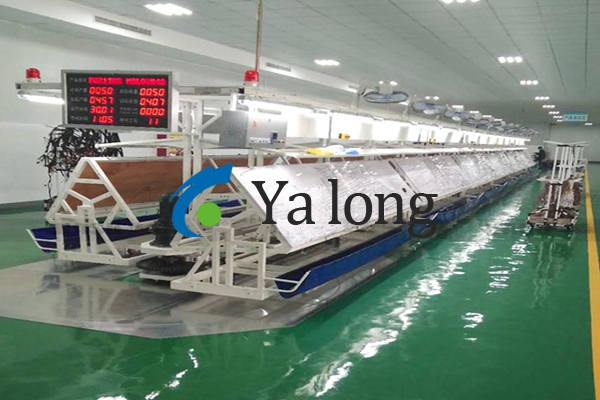
The wire harness assembly line is an efficient and automated production line that integrates processes such as cutting, crimping, assembling, and testing. It adopts a modular design, featuring a high degree of flexibility and automation, ensuring product quality and production efficiency. Meanwhile, it optimizes the production process through informatization management.
The automotive wire harness assembly line is an automated production system used in automobile manufacturing for producing and assembling automotive wire harnesses. The wire harness is the framework of the automotive electrical system, responsible for connecting and transmitting electricity and signals.
The following is a summary of the wire harness assembly line:
- Level of automation: Modern wire harness assembly lines usually feature a high level of automation, using automated equipment to improve production efficiency and reduce manual operations.
- Modular design: The assembly line adopts a modular design, facilitating rapid adjustment and reconfiguration according to the wire harness requirements of different vehicle models.
- Integrated processes: The wire harness assembly line integrates multiple such as cutting, terminal crimping, wire harness assembly, and testing, realizing one-stop production from raw materials to finished products.
- Quality control: The assembly line is equipped with online detection equipment to conduct real-time detection of the conductivity, insulation, etc., of the wire harness, ensuring product quality.
- Flexible production: It can adapt to the production of wire harnesses for different vehicle models and configurations, with a relatively high capacity for flexible production.
- Informatization management: It realizes the monitoring and management of the production process through an informatization system, collects production data, and conducts data analysis to optimize the production process.
- Environmental protection and energy conservation: Emphasis is placed on environmental protection and energy conservation during the design and production processes, reducing material waste and lowering energy consumption.
- Safety: The design and operation of the assembly line comply with safety standards, ensuring the safety of operators.
- Convenient maintenance: The design of the assembly line takes into account the convenience of maintenance, making equipment maintenance and troubleshooting more efficient.
- Cost-effectiveness: By improving production efficiency and reducing production costs, the assembly line helps enterprises enhance their market competitiveness.
In general, the automotive wire harness assembly line is a key link in the production of the automotive electrical system, and the efficiency of its design and operation directly affects the overall cost and quality of automobile manufacturing.